
Services
Digital Marketing
- Web Design
- Wordpress Design
- E-commerce Design
- UI/UX Design
- Responsive Design
- Website Redesign
Development Services
- Web Development
- Wordpress
- PHP
- Website Maintenance
- Website Migration
- Speed Optimization
Marketing Services
- Digital Marketing
- SEO
- PPC
- Content Marketing
- Social Media
- Amazon Marketing
Amazon Marketing
- Account Management
- PPC Management
- Amazon SEO
- Listing Optimization
- Account Audit
- Walmart Acc. Management
Industries
Hire Team
Developer
- Web Developer
- WordPress Developer
- PHP Developer
- Shopify Developer
Resources
Get Your Free Quote Now
Get a free quote for professional website design services tailored to your business needs, goals, brand, and budget.
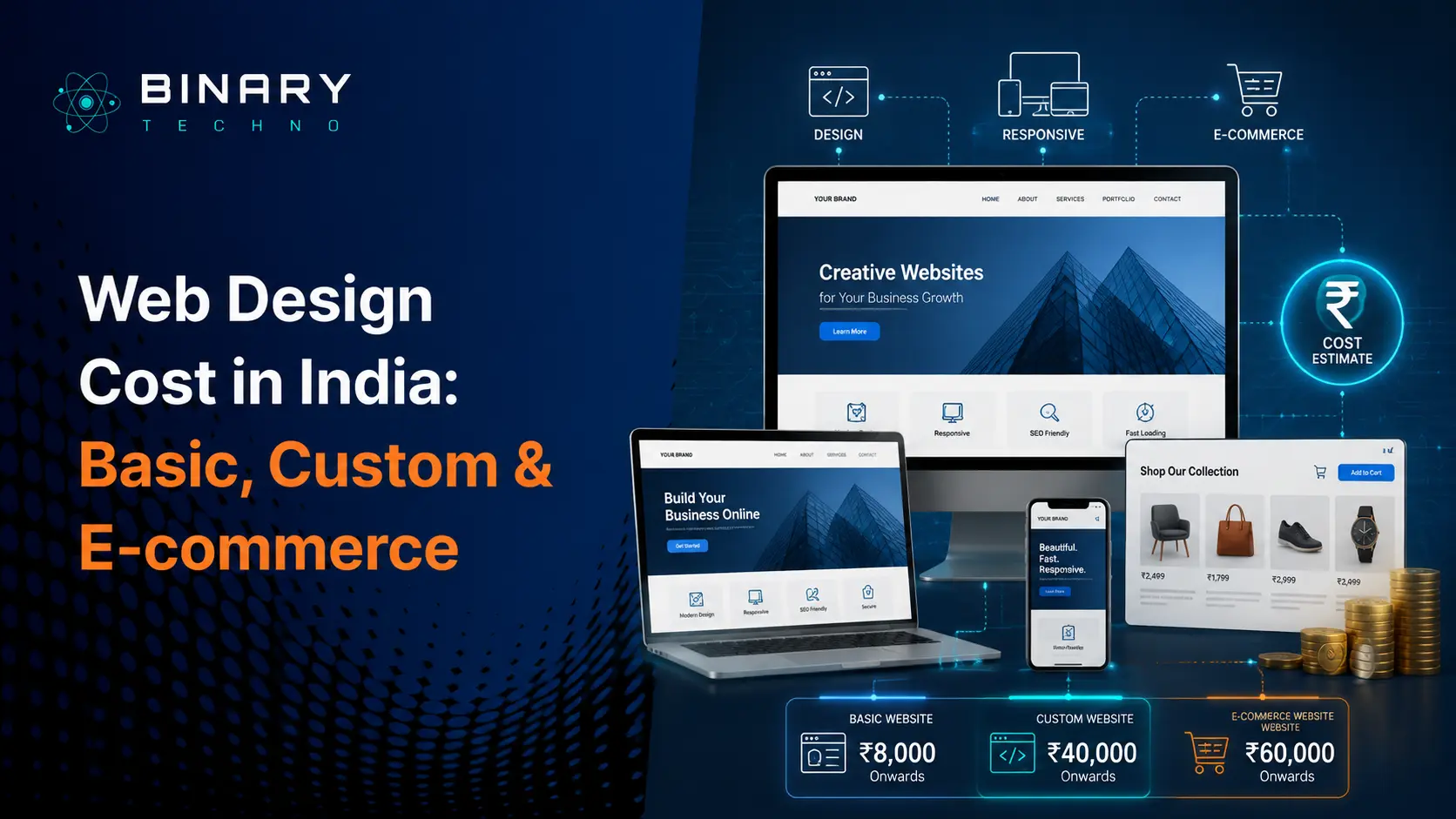
Web Design Cost in India: Basic, Custom & E-commerce
Objective
This blog helps businesses understand website costs in India, compare basic, custom, and e-commerce options, identify pricing factors, and choose a suitable website budget.
Planning a website in India often starts with one practical question: how much will it cost? The answer depends on your website type, design needs, features, technology, and development approach. A basic website may need only essential pages, while custom projects require more planning and development.
E-commerce websites usually cost more because they include product catalogs, shopping carts, payment gateways, customer accounts, and order management. Additional features can also increase the overall budget.
This guide explains the web design cost in India for basic, custom, and e-commerce websites. You will understand typical pricing factors, what each website type includes, and where your budget may increase during the design and development process.
Key Takeaways
- Web design cost in India can range from around ₹8,000 to ₹5,00,000+ depending on the website type, features, and development approach.
- Basic websites are suitable for startups and small businesses with simple requirements, while custom websites offer greater flexibility and branding options.
- E-commerce websites generally cost more because they require features such as product catalogues, payment gateways, shopping carts, inventory management, and customer accounts.
- The final website design price depends on factors such as the number of pages, design complexity, platform, functionality, content, SEO requirements, and ongoing support.
- WordPress and other CMS platforms can provide a balance between affordability, customization, and scalability.
- Comparing detailed proposals from freelancers and agencies can help you choose the right provider and avoid unexpected costs.
- Planning your website requirements, content, and essential features in advance can help control your budget without compromising quality.
Did You Know?
Did you know? Mobile devices accounted for 52.27% of global website traffic in Q1 2026, making responsive website design an important consideration for businesses targeting mobile users.
Table of Contents
- Web Design Cost in India at a Glance
- How Much Does Web Design Cost in India?
- Basic vs Custom vs E-commerce Website Cost
- What Factors Affect Website Design Cost in India?
- Website Design Cost by Development Approach
- How to Reduce Web Design Costs Without Hurting Quality
- Why Invest in Professional Web Design?
- FAQs About Web Design Cost in India
Web Design Cost in India at a Glance
Before reviewing into details, here’s a quick snapshot of what businesses typically spend:
- Basic websites: ₹8,000 – ₹40,000
- Custom websites: ₹40,000 – ₹1,50,000
- E-commerce websites: ₹60,000 – ₹5,00,000+
These ranges are approximate, since the final web design cost always depends on the scope of work, the number of pages, design complexity, and the platform or technology used. A small business landing page will always cost less than a fully custom-built online store with hundreds of product listings and integrated payment systems.
Understanding this range early helps you set realistic expectations before you approach a developer or web design agency for a formal quote.
How Much Does Web Design Cost in India?
The website design price in India varies widely because “a website” isn’t a single product – it’s a combination of design, development, content, functionality, and ongoing support. Two businesses asking for a five-page website can receive very different quotes depending on whether they want a template-based build or a fully custom design created from scratch.
Generally, web design pricing in India is influenced by three broad categories:
- Freelancers – usually the most affordable option, suited for small budgets and simple requirements.
- Small to mid-sized agencies – offer a balance of quality, support, and moderate pricing.
- Large agencies or specialised studios – charge premium rates but deliver advanced design, strategy, and long-term scalability.
The website development services cost in India also depends on whether you need a static informational site or a dynamic, database-driven platform with user logins, search functionality, or booking systems. The more moving parts a website has, the more time and testing it demands, which naturally raises the price.
For businesses comparing multiple providers, it helps to request an itemized quote so you can see exactly what you’re paying for – design, development, content, testing, and post-launch support – rather than a single lump-sum figure.
Want expert guidance before investing in your new website?
Not sure what your website needs? Speak with our experts to plan a professional website that fits your goals and budget.
Basic vs Custom vs E-commerce Website Cost (Quick Comparison)
Here’s a side-by-side look at the cost of website design in India across the three most common website categories:
Website Type | Typical Cost Range | Pages/Scope | Common Features |
Basic Website | ₹8,000 – ₹40,000 | 3–8 pages | Home, About, Services, Contact, basic forms |
Custom Website | ₹40,000 – ₹1,50,000 | 8–20+ pages | Unique design, custom layouts, integrations, blog |
E-commerce Website | ₹60,000 – ₹5,00,000+ | Unlimited product pages | Cart, payment gateway, inventory, customer accounts |
A basic website works well for startups, freelancers, or small local businesses that just need an online presence. Custom websites suit growing businesses that want a distinct brand identity and more advanced functionality. E-commerce websites are built for businesses that plan to sell products or services directly online, and they require the most investment due to their technical complexity.
What Factors Affect Website Design Cost in India?
Several variables influence website designing charges in India, and understanding them helps you budget more accurately.
Number of Pages and Content Volume
More pages mean more design time, more content writing, and more testing. A 5-page site is naturally cheaper than a 50-page site.
Design Complexity and Customization
A template-based design costs less than a fully custom web design layout built from scratch. Custom designs require wireframing, prototyping, and multiple review rounds, which adds to the overall cost.
Technology and Platform
WordPress, Shopify, Wix, and custom-coded solutions (like React or Laravel) all come with different cost structures. Custom-coded websites typically cost more because they require specialized developers.
Features and Functionality
Contact forms, booking systems, live chat, membership areas, multilingual support, and third-party integrations all add to development time and, therefore, cost.
Responsiveness and Performance
A mobile-responsive website requires additional design and testing across devices – phones, tablets, and desktops. Skipping this step may reduce cost initially but hurts user experience and search rankings later.
SEO and Structure Requirements
Building an SEO-friendly website structure from the start – clean URLs, proper heading hierarchy, and fast-loading pages – takes extra planning time but saves money on fixes down the line.
Content and Media
Professional copywriting, photography, and image optimization for faster load times can be bundled into the project or billed separately, depending on the provider.
Maintenance and Support
Ongoing updates, security patches, and hosting support are sometimes included in the initial package and sometimes charged as an annual retainer.
Website Design Cost by Business Type
Different businesses have different website needs, which directly affects pricing.
Startups and Small Businesses
Startups usually need a clean, professional website that communicates their offering clearly. A basic to mid-range custom website – typically between ₹25,000 and ₹80,000 – is often enough at this stage.
Corporate and Enterprise Websites
Larger companies need more pages, advanced security, integrations with internal systems, and polished branding. These projects can range from ₹1,50,000 to several lakhs depending on scale.
E-commerce and Retail Businesses
Online stores need product catalogs, secure checkout, and inventory management. Depending on the number of products and integrations (like ERP or CRM systems), costs can range from ₹60,000 to ₹5,00,000 or more.
Service-Based Businesses (Consultants, Agencies, Clinics)
These businesses often prioritize appointment booking, portfolio showcases, and lead-generation forms. A well-designed custom website in this category typically falls between ₹40,000 and ₹1,20,000.
Website Design Cost by Development Approach
The method used to build your website significantly impacts the final bill.
Website Builders (Wix, Squarespace)
These are the cheapest option, often available through monthly subscriptions starting around ₹500–₹2,000 per month. They’re best for very simple sites but offer limited customization.
CMS Platforms (WordPress)
WordPress remains one of the most popular choices in India because it balances affordability with flexibility. Development costs typically range from ₹15,000 to ₹1,00,000 depending on theme customization and plugins used.
Custom Development (Code-Based)
Fully custom-coded websites, built using frameworks rather than pre-made themes, cost more – often ₹80,000 and above – but offer complete control over design, performance, and scalability.
Hiring Freelancers vs Agencies
Freelancers usually charge less but may have limited bandwidth for large projects. Agencies charge more but bring structured processes, dedicated support teams, and post-launch maintenance, which many businesses find worth the added website design company India fees.
How to Reduce Web Design Costs Without Hurting Quality
You don’t have to overspend to get a professional website. Here are practical ways to manage your budget:
- Start with essential pages only and expand later as your business grows.
- Use a CMS platform like WordPress instead of fully custom code, if your needs are moderate.
- Prepare your content in advance – text, images, and branding – so developers spend less time waiting or revising.
- Choose a template-based custom design rather than building every element from scratch.
- Avoid unnecessary features at launch; add complex functionality only when there’s a clear business need.
- Compare multiple quotes from freelancers and agencies to understand fair market pricing.
- Plan for maintenance costs upfront so there are no surprise expenses later.
Why Invest in Professional Web Design?
A website is often the first interaction a customer has with your business, and first impressions matter. Professional web design goes beyond aesthetics – it builds trust, improves usability, and supports long-term growth.
A well-structured website loads faster, ranks better in search results, and converts more visitors into customers. Poorly designed or outdated websites, on the other hand, can drive potential customers away within seconds. Investing in quality design and development upfront often saves money in the long run by reducing the need for redesigns, fixing usability issues, or losing business to competitors with stronger online presences.
Whether you choose a basic, custom, or e-commerce website, the right investment depends on your business goals, target audience, and growth plans – not just the lowest quote available.
Ready to build a website that fits your budget and business goals?
Get expert guidance to build a professional website with the right design, features, and functionality for your business goals and budget.
FAQs About Web Design Cost in India
How much does a website cost in India?
The average cost ranges from ₹8,000 for basic websites to over ₹5,00,000 for advanced e-commerce platforms. Pricing depends on design complexity, features, number of pages, and the development approach chosen for the project.
What factors affect website design costs in India?
Several factors influence website costs, including the number of pages, design complexity, platform, features, content, integrations, responsiveness, SEO requirements, and security. Custom functionality usually increases the budget because it requires additional design, development, testing, and maintenance work.
Is custom website design better than using a template?
Custom website design provides greater control over branding, layout, functionality, and user experience. Templates are generally more affordable and faster to launch. The right option depends on your business goals, budget, required features, and how unique your website needs to be.
How much does an e-commerce website cost in India?
An e-commerce website can cost approximately ₹40,000 to ₹2,50,000 or more. The final price depends on product quantity, payment gateways, shipping options, inventory management, customer accounts, integrations, filters, and other advanced features required for online selling.
Does website cost include domain and hosting?
Not always. Some website packages include domain and hosting for a specific period, while others charge separately. Before choosing a package, check whether domain registration, hosting, SSL, backups, renewals, and maintenance are included. This helps you understand the complete project cost.
How long does it take to build a website in India?
A basic website can usually take one to three weeks. Custom websites may require four to ten weeks, while larger e-commerce projects can take several months. The timeline depends on design complexity, content availability, development requirements, revisions, integrations, and testing.
How can I reduce website design costs?
You can reduce costs by defining requirements early, preparing content beforehand, choosing necessary features, and avoiding unnecessary custom development. Using a suitable template can also help. Launching essential features first and adding advanced functions later can keep the initial investment manageable.
How do I choose the right website design company in India?
Review the company’s portfolio, experience, services, pricing, technologies, client feedback, and development process. Ask for a detailed proposal covering pages, features, timelines, revisions, ownership, hosting, and support. Comparing complete proposals helps you choose a provider based on value rather than price alone.