
SEO Friendly Web Design: How to Build a Better Website Structure
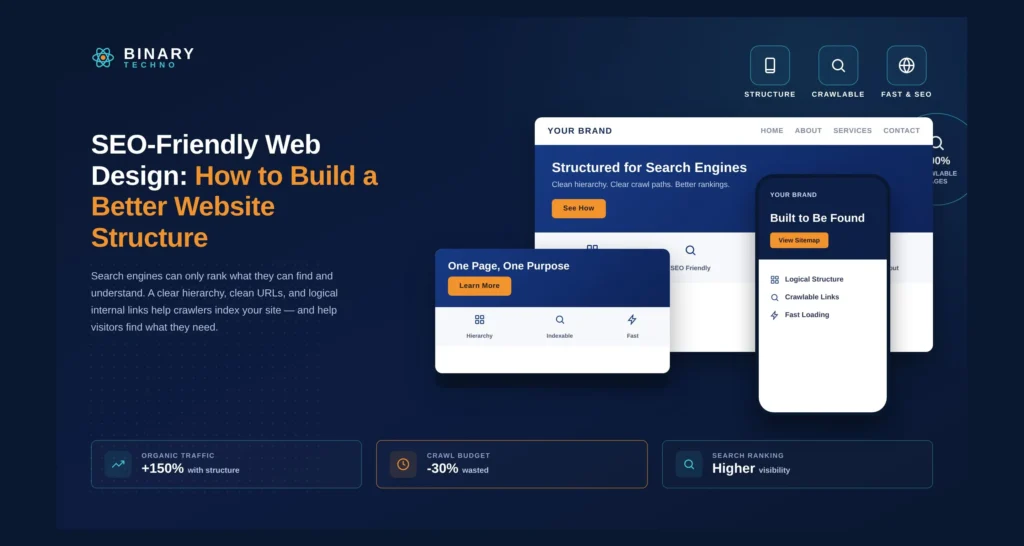
Get Your Free Quote Now Get a free quote for web design, development, and Amazon marketing services tailored to your business needs. Get Your Free Quote Mail Us Chat On Whatsapp SEO-Friendly Web Design: How to Build a Better Website Structure Objective Learn how to design a clear, user-friendly website structure that helps search engines crawl your pages easily and provides visitors with an intuitive navigation experience to boost rankings and conversions. A good website should be easy to use and easy for search engines to understand. The way you arrange your pages, menus, links, and content can affect how people move around your site and how search engines find your pages. SEO-friendly web design helps you create a website with a clear structure from the start. Simple navigation, clean URLs, mobile-friendly pages, fast loading speed, and proper internal links can make your website easier to use and crawl. In this blog, we will explain how to create a better website structure for SEO. You will learn simple ways to organize your pages, improve navigation, connect related content, and make your website more search-friendly. Key Takeaways A clear website structure helps visitors and search engines find important pages easily. Simple navigation, URLs, and internal links can improve website usability and SEO. Mobile-friendly design and fast loading speed are important for a better user experience. Proper page hierarchy helps search engines understand the relationship between website pages. Good SEO and web design can support better traffic, engagement, leads, and business growth. A clear website structure helps visitors and search engines find important pages easily. Simple navigation, URLs, and internal links can improve website usability and SEO. Mobile-friendly design and fast loading speed are important for a better user experience. Proper page hierarchy helps search engines understand the relationship between website pages. Good SEO and web design can support better traffic, engagement, leads, and business growth. Did You Know? A study by Ahrefs found that 96.55% of all web pages receive zero organic search traffic from Google. A primary driver is poor site architecture and orphan pages that crawlers cannot reach. Table of Contents What Is SEO-Friendly Web Design? Why Website Structure Matters for SEO How to Build an SEO-Friendly Website Structure How UX and SEO Work Together in Web Design How SEO-Friendly Web Design Can Improve Business Results The Key to a Better SEO-Friendly Website Frequently Asked Questions What Is SEO-Friendly Web Design? SEO-friendly web design is the practice of designing, building, and structuring a website so that search engines can easily crawl, index, and understand its content, while simultaneously providing a smooth, intuitive experience for real visitors. It merges aesthetic visual elements with technical foundations. When search engines like Google evaluate a site, they send out automated software called crawlers (or bots). These crawlers scan your site’s codebase, parse the content, follow internal links, and assess how quickly and reliably each page loads. If your site features clean code, responsive layouts, fast page speeds, and a clear architectural hierarchy, crawlers can index your pages efficiently. At the same time, human visitors benefit from an intuitive interface. A site designed with user needs in mind ensures that information is easy to find, text is readable across all devices, and interactive elements respond instantly. When design and search optimization work together, your website attracts organic traffic and keeps visitors engaged. Why Website Structure Matters for SEO Website structure refers to how the pages on your site are organized, categorized, and linked together. Think of it as the architectural blueprint of a physical building. Without a solid foundation and logical floor plan, visitors get lost, and structural problems arise over time. 1. Enhanced Crawlability and Indexability Search engines discover new content by following links from known pages to new ones. If your website has a chaotic layout with isolated pages-often called “orphan pages”-crawlers may miss critical content entirely. A well-organized structure creates direct, logical pathways for crawlers to discover every important page on your domain. 2. Strategic Distribution of Page Authority Page Authority (or link equity) flows through your website via internal links. When your homepage receives external backlinks, that value diffuses down to secondary and tertiary pages through a well-structured linking strategy. A systematic structure ensures that your high-value conversion pages receive sufficient link equity to rank well in search results. 3. Prevention of Keyword Cannibalization Without a clear framework, site owners often create overlapping pages that target identical topics or terms. This causes pages on the same domain to compete against each other in search engine results pages (SERPs). A structured layout assigns specific topics and intent to distinct sections, ensuring every page serves a unique purpose. 4. Better User Engagement and Dwell Time A logical structure helps users find the information they need within a few clicks. When users navigate effortlessly, bounce rates drop, pageviews per session rise, and overall dwell time increases. These user engagement metrics signal to search engines that your site provides high-value content. Want to Make Your Website Faster, Simpler, and More Search-Friendly? Improve your website’s speed, usability, and search visibility with expert web design and optimization solutions tailored to your business goals. Talk to Our Experts How to Build an SEO-Friendly Website Structure Creating a search-ready framework requires careful planning before writing code or publishing content. Follow these steps to build an optimal hierarchy for both users and search bots. 1. Adopt a Logical Pyramid Hierarchy The most effective way to organize a site is the pyramid structure: Homepage: Located at the top of the pyramid. Primary Categories (Parent Pages): 3 to 5 core categories branching directly from the homepage. Subcategories (Child Pages): Specific topics nested neatly under each main category. Individual Posts/Products: Individual articles, product pages, or detailed documentation linked beneath subcategories. 2. Implement the Flat Site Model (Three-Click Rule) Avoid deep hierarchies where users or bots must click four or five times to reach a page from the homepage. Strive for a flat architecture where any page on your site is
Mobile Responsive Website Design: Why Your Website Needs It
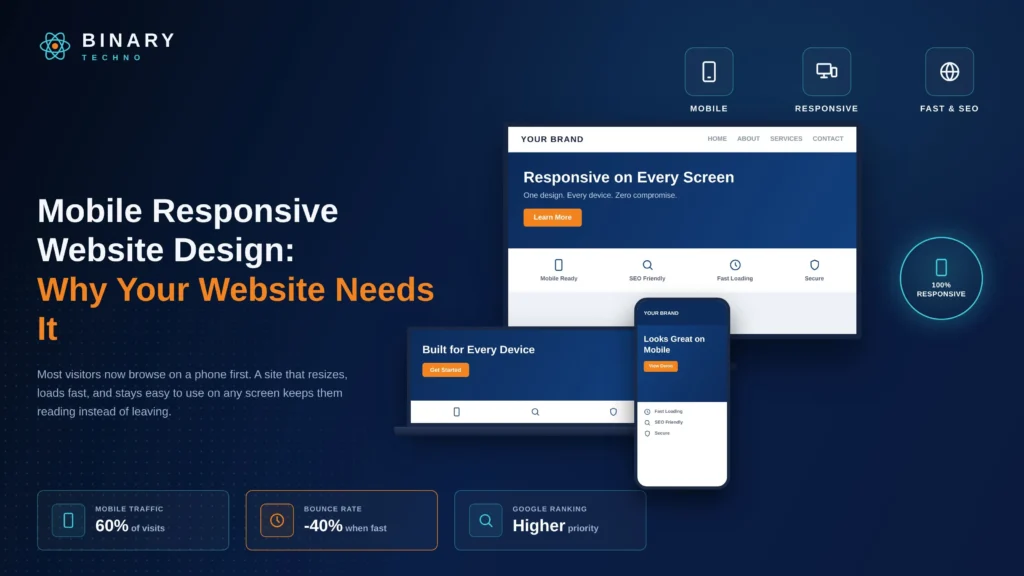
Explore why mobile-responsive website design matters for user experience, SEO, and conversions. Learn key features, costs, and best practices to make your site mobile-friendly.
Web Design Cost in India: Basic, Custom & E-commerce

Get Your Free Quote Now Get a free quote for professional website design services tailored to your business needs, goals, brand, and budget. Get Your Free Quote Mail Us Chat On Whatsapp Web Design Cost in India: Basic, Custom & E-commerce Objective This blog helps businesses understand website costs in India, compare basic, custom, and e-commerce options, identify pricing factors, and choose a suitable website budget. Planning a website in India often starts with one practical question: how much will it cost? The answer depends on your website type, design needs, features, technology, and development approach. A basic website may need only essential pages, while custom projects require more planning and development. E-commerce websites usually cost more because they include product catalogs, shopping carts, payment gateways, customer accounts, and order management. Additional features can also increase the overall budget. This guide explains the web design cost in India for basic, custom, and e-commerce websites. You will understand typical pricing factors, what each website type includes, and where your budget may increase during the design and development process. Key Takeaways Web design cost in India can range from around ₹8,000 to ₹5,00,000+ depending on the website type, features, and development approach. Basic websites are suitable for startups and small businesses with simple requirements, while custom websites offer greater flexibility and branding options. E-commerce websites generally cost more because they require features such as product catalogues, payment gateways, shopping carts, inventory management, and customer accounts. The final website design price depends on factors such as the number of pages, design complexity, platform, functionality, content, SEO requirements, and ongoing support. WordPress and other CMS platforms can provide a balance between affordability, customization, and scalability. Comparing detailed proposals from freelancers and agencies can help you choose the right provider and avoid unexpected costs. Planning your website requirements, content, and essential features in advance can help control your budget without compromising quality. Web design cost in India can range from around ₹8,000 to ₹5,00,000+ depending on the website type, features, and development approach. Basic websites are suitable for startups and small businesses with simple requirements, while custom websites offer greater flexibility and branding options. E-commerce websites generally cost more because they require features such as product catalogues, payment gateways, shopping carts, inventory management, and customer accounts. The final website design price depends on factors such as the number of pages, design complexity, platform, functionality, content, SEO requirements, and ongoing support. WordPress and other CMS platforms can provide a balance between affordability, customization, and scalability. Comparing detailed proposals from freelancers and agencies can help you choose the right provider and avoid unexpected costs. Planning your website requirements, content, and essential features in advance can help control your budget without compromising quality. Did You Know? Did you know? Mobile devices accounted for 52.27% of global website traffic in Q1 2026, making responsive website design an important consideration for businesses targeting mobile users. Table of Contents Web Design Cost in India at a Glance How Much Does Web Design Cost in India? Basic vs Custom vs E-commerce Website Cost What Factors Affect Website Design Cost in India? Website Design Cost by Development Approach How to Reduce Web Design Costs Without Hurting Quality Why Invest in Professional Web Design? FAQs About Web Design Cost in India Web Design Cost in India at a Glance Before reviewing into details, here’s a quick snapshot of what businesses typically spend: Basic websites: ₹8,000 – ₹40,000 Custom websites: ₹40,000 – ₹1,50,000 E-commerce websites: ₹60,000 – ₹5,00,000+ These ranges are approximate, since the final web design cost always depends on the scope of work, the number of pages, design complexity, and the platform or technology used. A small business landing page will always cost less than a fully custom-built online store with hundreds of product listings and integrated payment systems. Understanding this range early helps you set realistic expectations before you approach a developer or web design agency for a formal quote. How Much Does Web Design Cost in India? The website design price in India varies widely because “a website” isn’t a single product – it’s a combination of design, development, content, functionality, and ongoing support. Two businesses asking for a five-page website can receive very different quotes depending on whether they want a template-based build or a fully custom design created from scratch. Generally, web design pricing in India is influenced by three broad categories: Freelancers – usually the most affordable option, suited for small budgets and simple requirements. Small to mid-sized agencies – offer a balance of quality, support, and moderate pricing. Large agencies or specialised studios – charge premium rates but deliver advanced design, strategy, and long-term scalability. The website development services cost in India also depends on whether you need a static informational site or a dynamic, database-driven platform with user logins, search functionality, or booking systems. The more moving parts a website has, the more time and testing it demands, which naturally raises the price. For businesses comparing multiple providers, it helps to request an itemized quote so you can see exactly what you’re paying for – design, development, content, testing, and post-launch support – rather than a single lump-sum figure. Want expert guidance before investing in your new website? Not sure what your website needs? Speak with our experts to plan a professional website that fits your goals and budget. Talk to Our Experts Basic vs Custom vs E-commerce Website Cost (Quick Comparison) Here’s a side-by-side look at the cost of website design in India across the three most common website categories: Website Type Typical Cost Range Pages/Scope Common Features Basic Website ₹8,000 – ₹40,000 3–8 pages Home, About, Services, Contact, basic forms Custom Website ₹40,000 – ₹1,50,000 8–20+ pages Unique design, custom layouts, integrations, blog E-commerce Website ₹60,000 – ₹5,00,000+ Unlimited product pages Cart, payment gateway, inventory, customer accounts A basic website works well for startups, freelancers, or small local businesses that just need an online presence. Custom websites suit growing businesses that want a
Why Mobile-Friendly Websites Matter for SEO
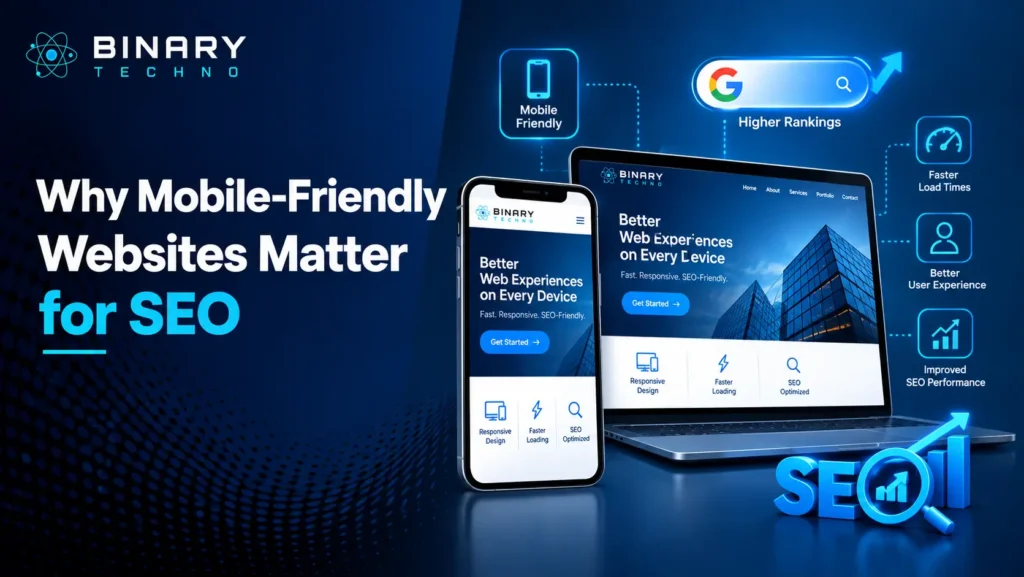
Get Your Free Quote Now Get a free quote for web design, development, and Amazon marketing services tailored to your business needs. Get Your Free Quote Mail Us Chat On Whatsapp Why Mobile-Friendly Websites Matter for SEO Objective The objective of this blog is to explain why mobile-friendly websites are essential for SEO, user experience, and business growth in 2026. You will learn how mobile optimization affects Google rankings, customer engagement, website traffic, and conversions, along with actionable strategies to improve your website’s mobile performance. A modern website is essential for attracting visitors, building trust, and driving business growth. Users expect fast loading speeds, mobile-friendly design, strong security, and easy navigation. Incorporating these features not only improves user experience but also boosts search engine visibility and conversions. In this blog, we’ll explore the top features every modern website must have for long-term success. Key Takeaways Mobile-friendly websites rank better on Google. Most online users browse through smartphones. Poor mobile experience increases bounce rates. Fast-loading mobile pages improve conversions. Mobile optimization supports local SEO performance. Responsive design helps websites adapt to all screen sizes. Google uses mobile-first indexing for ranking websites. Better mobile usability improves customer trust and engagement. Mobile-friendly websites rank better on Google. Most online users browse through smartphones. Poor mobile experience increases bounce rates. Fast-loading mobile pages improve conversions. Mobile optimization supports local SEO performance. Responsive design helps websites adapt to all screen sizes. Google uses mobile-first indexing for ranking websites. Better mobile usability improves customer trust and engagement. Did You Know? According to Statista, mobile devices accounted for 62.73% of global website traffic in Q2 2025, highlighting the importance of mobile-friendly and responsive web design. Table of Contents Introduction What Is a Mobile-Friendly Website? Why Mobile Optimization Matters in 2026 Google’s Mobile-First Indexing Explained How Mobile-Friendly Websites Improve SEO Mobile Speed and User Experience Responsive Design vs Mobile Apps Common Mobile SEO Mistakes Best Practices for Mobile-Friendly Websites Importance of Mobile SEO for Local Businesses Future Trends in Mobile SEO Final Thoughts FAQs Introduction Imagine opening a website on your phone and immediately struggling to read the text. The buttons are too small, images look broken, and the page takes forever to load. Most people leave such websites within seconds. Now imagine the opposite experience. The website loads quickly, looks clean, fits perfectly on your screen, and helps you find information instantly. That is the power of a mobile-friendly website. In today’s competitive digital landscape, mobile-friendly websites play a major role in improving SEO, user experience, and online visibility. Businesses that invest in mobile website optimization often achieve better engagement and higher Google rankings. Because of this shift, search engines like Google now prioritise websites that provide excellent mobile experiences. If your website is not optimized for mobile users, your SEO performance, rankings, traffic, and conversions may suffer significantly. This is why mobile-friendly websites are no longer optional. They are a core part of modern SEO strategy. What Is a Mobile-Friendly Website? Mobile SEO is no longer just an optional strategy. Google now prioritizes mobile-friendly website SEO because most users browse through smartphones and tablets. A responsive website design helps businesses deliver better experiences across all devices. A mobile-friendly website typically includes: Responsive design Easy-to-read text Fast loading speed Mobile-friendly navigation Optimized images Clickable buttons with proper spacing Smooth scrolling experience The goal is simple: make browsing easy and comfortable for mobile users. Build an SEO-Optimized, Mobile-Friendly Website Is your website mobile-friendly and optimized for search engines? A responsive, SEO-focused website can improve user experience, search visibility, and conversions across every device. Get a Free Website Audit Today Why Mobile Optimization Matters in 2026 Mobile usage continues to grow every year. People now depend on smartphones for almost everything, including: Online shopping Social media browsing Local business searches Reading articles Watching videos Booking services Comparing products Businesses that ignore mobile optimisation risk losing visibility, customers, and revenue. Google understands user behaviour very well. Since most searches happen on mobile devices, Google wants to provide users with websites that work properly on smaller screens. That is why mobile usability has become a major ranking factor. A website that performs poorly on mobile may experience: Lower rankings Reduced traffic High bounce rates Poor engagement Fewer conversions On the other hand, a mobile-friendly website creates a better experience that keeps users engaged and encourages them to take action. Google’s Mobile-First Indexing Explained Google introduced mobile-first indexing to prioritize mobile versions of websites during indexing and ranking. Earlier, Google mainly analyzed desktop versions of websites. But today, Google primarily checks the mobile version to determine rankings. This means: Your mobile site content matters most Poor mobile usability can hurt rankings Mobile page speed directly impacts SEO Mobile user experience influences visibility If your website is not mobile-friendly, search engines may consider it less valuable for users. Google’s goal is to deliver the best possible experience to mobile searchers. Websites that fail to meet these expectations often struggle to rank competitively. How Mobile-Friendly Websites Improve SEO A strong mobile optimization strategy improves mobile search ranking and helps websites perform better in organic search results. Search engines reward websites that provide fast-loading pages, responsive layouts, and smooth mobile usability. 1. Better Search Rankings Google rewards websites that provide excellent mobile experiences. Mobile-friendly sites are more likely to appear higher in search results. Responsive design, faster loading times, and proper mobile usability contribute directly to improved rankings. 2. Lower Bounce Rates Bounce rate measures how quickly users leave your website. If visitors struggle to navigate your site on mobile devices, they will likely leave immediately. A mobile-optimized website encourages users to stay longer, explore more pages, and engage with your content. 3. Faster Page Loading Speed Mobile page speed directly affects both user experience and SEO performance. Websites with optimized mobile pages and faster loading times usually experience lower bounce rates and better conversion rates. Mobile-friendly websites usually include: Compressed images Optimized code Faster hosting Better caching systems These improvements help pages load
Top Features Every Modern Website Must Have

Get Your Free Quote Now Get a free quote for web design, development, and Amazon marketing services tailored to your business needs. Get Your Free Quote Mail Us Chat On Whatsapp Top Features Every Modern Website Must Have Objective This blog is written to help business owners, marketers, and anyone planning or upgrading a website understand exactly what features a modern website must have to succeed online. A website is often the first point of contact between your business and a potential customer. Getting it right is not optional. By the end of this blog, you will have a clear checklist of essential features that separate high-performing websites from outdated ones. A modern website is essential for attracting visitors, building trust, and driving business growth. Users expect fast loading speeds, mobile-friendly design, strong security, and easy navigation. Incorporating these features not only improves user experience but also boosts search engine visibility and conversions. In this blog, we’ll explore the top features every modern website must have for long-term success. Key Takeaways A modern website must be fast, mobile-friendly, and easy to navigate. Security, accessibility, and SEO are non-negotiable features, not optional extras. Clear calls to action guide visitors toward becoming customers. User experience is at the heart of every feature a modern website should have. Missing even one key feature can cost you traffic, leads, and sales. A well-built website works for your business around the clock, every single day. A modern website must be fast, mobile-friendly, and easy to navigate. Security, accessibility, and SEO are non-negotiable features, not optional extras. Clear calls to action guide visitors toward becoming customers. User experience is at the heart of every feature a modern website should have. Missing even one key feature can cost you traffic, leads, and sales. A well-built website works for your business around the clock, every single day. Did You Know? According to Google News Initiative, websites that meet Core Web Vitals standards are 24% less likely to have visitors abandon their pages before they fully load. This means the features and performance of your website directly decide whether visitors stay or leave within seconds of arriving. Table of Contents Mobile-Responsive Design Fast Page Load Speed Clear and Simple Navigation Strong and Consistent Branding Compelling Calls to Action Search Engine Optimisation (SEO) SSL Certificate and Website Security High-Quality Content Contact Information and Live Chat Website Analytics and Tracking Accessibility Features Social Proof and Trust Signals FAQs Mobile-Responsive Design Mobile-responsive design is no longer a bonus feature. It is the foundation of any modern website. More than 60 percent of all global web traffic now comes from mobile devices. If your website does not look and work perfectly on a smartphone or tablet, you are losing more than half of your potential audience before they even read a word. A mobile-friendly website automatically adjusts its layout, font sizes, images, and navigation to fit any screen size. With responsive design, whether someone visits your site on a desktop, tablet, or smartphone, the experience remains seamless, easy to navigate, and user-friendly. This not only improves user satisfaction but also supports better search engine rankings and engagement. Google also uses mobile-first indexing. This means Google primarily looks at the mobile version of your website when deciding how to rank it in search results. A site that is not mobile-friendly will rank lower, get less traffic, and lose business to competitors who have invested in responsive design. When designing for mobile, priority should be given to readable font sizes, easy-to-tap buttons, fast-loading images, and a simplified navigation menu. Every element that works on desktop must also work cleanly on mobile. Fast Page Load Speed Speed is one of the most critical features of a modern website. Users today have no patience for slow websites. Research shows that even a one-second delay in load time can reduce conversions by up to 20 percent. A website that takes five or more seconds to load will lose the vast majority of its visitors before the page even appears on screen. Page speed also directly affects your search engine ranking. Google factors load time into its ranking algorithm. A faster website ranks higher, attracts more traffic, and keeps visitors engaged for longer. There are several ways to improve website speed. Images should be compressed and optimised before uploading. Unnecessary code and plugins should be removed. A content delivery network should be used to serve your site from servers closest to the user. Browser caching should be enabled so returning visitors load the site faster. A modern website should aim to load in under three seconds on both desktop and mobile. Tools like Google PageSpeed Insights can help you measure and improve your current load time. Is your website slow, outdated, or losing visitors before they even see your offer? Our team builds fast, modern, and fully optimised websites that keep visitors engaged and convert them into customers. Get a Free Website Audit Today Clear and Simple Navigation Navigation is the roadmap of your website. If visitors cannot find what they are looking for within a few seconds, they will leave and find a competitor who makes it easier. A modern website must have a clean, logical, and intuitive navigation structure. The main menu should be clearly visible at the top of every page. It should include only the most important pages, typically five to seven items at most. Too many menu options overwhelm users and make it harder to decide where to go. Every page on your website should be reachable within three clicks from the homepage. This is known as the three-click rule, and it keeps users from getting lost or frustrated deep within your site. A well-designed navigation also includes a clear logo that links back to the homepage, a sticky header that stays visible as users scroll, a search bar for larger sites with lots of content, and a footer navigation with links to important pages like contact, privacy policy, and terms of service.
What Does a Web Design Agency Actually Do?

Get Your Free Quote Now Get a free quote for web design, development, and Amazon marketing services tailored to your business needs. Get Your Free Quote Mail Us Chat On Whatsapp What Does a Web Design Agency Actually Do? Objective The objective of this blog is to help business owners, entrepreneurs, startups, and marketers understand what a web design agency actually does and how its services contribute to building a successful online presence. Key Takeaways A web design agency does far more than just design websites. You get a full team of specialists, not just one person. Agencies align their work with your business goals. They follow a clear process from planning to launch. Professional web design improves user experience and increases conversions. A web design agency does far more than just design websites. You get a full team of specialists, not just one person. Agencies align their work with your business goals. They follow a clear process from planning to launch. Professional web design improves user experience and increases conversions. Did You Know? Users form an opinion about a website in just 0.05 seconds. That is 50 milliseconds. Research by Google confirms that visual design drives almost all of that first impression. A web design agency exists to make those 50 milliseconds work in your favour. Table of Contents What Is a Web Design Agency? Core Services a Web Design Agency Provides The Web Design Process Step by Step Web Design vs Web Development Why Hire an Agency Instead of a Freelancer? What Does It Cost? How to Choose the Right Agency FAQs What Is a Web Design Agency? A web design agency is a professional company that plans, builds, and maintains websites for businesses. Unlike a solo freelancer, an agency brings together a whole team. That team includes designers, developers, SEO specialists, copywriters, and UX strategists. Everyone works together to deliver one complete solution. Modern agencies do much more than build pages. They study your business, research your competitors, and understand your target audience. Then they design a digital experience that drives real results. Think of a website design agency as the architect and builder of your online presence. You bring the vision. They bring the skills and tools to make it real. Core Services a Web Design Agency Provides Many people think agencies only make websites look nice. That is only a small part of what they actually do. Website Design (UI and UX) UI design covers how the site looks, including colours, fonts, and layouts. UX design covers how the site works, including navigation, page flow, and ease of use. A good agency handles both together. Web development Need to be turned into real, working websites. Front-end developers build what users see on screen. Back-end developers handle databases, logic, and third-party integrations. Agencies work across platforms like WordPress, Shopify, Webflow, and custom builds. Brand Strategy and Visual Identity Before any design begins, a good agency asks the right questions. Who are you? Who is your audience? What do you want people to feel? They help shape your brand tone, colour palette, and messaging so your website feels authentic. Search Engine Optimisation (SEO) A site that no one can find is a wasted investment. Agencies build SEO-friendly web design into the foundation of your website to improve visibility and search engine performance. This includes clean URL structures, optimized meta tags, fast page speed, mobile responsiveness, proper heading hierarchy, and user-friendly navigation. By combining design with SEO best practices, web design agencies help your website rank higher in search results and attract more qualified traffic. Content and Copywriting Words drive action. Many agencies write or guide the copy on your site. From homepage headlines to product descriptions, every word is crafted to connect with your audience and support conversions. E-Commerce Solutions For businesses selling online, agencies build full online stores. This covers product pages, checkout flows, payment gateways, and inventory systems that are easy to use and trustworthy. Ongoing Maintenance and Support After your site goes live, it still needs care. Agencies offer maintenance plans that cover security updates, performance monitoring, content changes, and technical fixes. Ready to take your website to the next level? Do not let an outdated website cost you customers. Request a free website audit now to discover exactly what needs improvement. Get a Free Consultation The Web Design Process Step by Step A professional agency does not just start designing right away. They follow a clear process to make sure the final product meets your goals. Step 1: Discovery and Research The agency learns about your business, your audience, your competitors, and your goals. This shapes every decision that follows. Step 2: Strategy and Planning The team maps out the site structure, page layout, content plan, and technical requirements. This is the blueprint stage. Step 3: Wireframing Simple wireframes are created to show the layout of each page without any visual design. This helps agree on structure before investing in full design. Step 4: Visual Design Now the look and feel takes shape. Colours, fonts, images, and design elements are applied based on your brand identity. Step 5: Development Developers bring the approved designs to life. They code the site, add functionality, connect integrations, and make everything work properly. Step 6: Testing The site is tested across devices, browsers, and screen sizes. Speed, links, forms, and user journeys are all checked before launch. Step 7: Launch The site goes live. The agency monitors it closely in the first days to catch any issues early. Step 8: Post-Launch Support Good agencies do not disappear after launch. They offer ongoing support, performance tracking, and improvements over time. Web Design vs Web Development These two terms are often used together, but they mean different things. Web design is about how a site looks and feels. It covers layout, colours, typography, images, and the overall user experience. Web development is about how a site functions. It covers the code, the database, the server, and
How to Choose Web Design Company

Get Your Free Quote Now Get a free quote for web design, development, and Amazon marketing services tailored to your business needs. Get Your Free Quote Mail Us Chat On Whatsapp How to Choose the Right Web Design Company for Your Business Objective This blog helps business owners find the right web design company in 2026. It covers what to look for, major red flags, pricing, and key questions to ask before signing any contract. Key Takeaways Your website is your most important digital asset, and the agency you hire shapes it entirely. Portfolio quality, industry experience, and communication style matter more than price alone. A good web design company understands SEO, mobile responsiveness, and conversion goals. Always ask for case studies, timelines, and post-launch support before committing. Pricing varies by project scope, features, and agency size. Know your budget before outreach. Your website is your most important digital asset, and the agency you hire shapes it entirely. Portfolio quality, industry experience, and communication style matter more than price alone. A good web design company understands SEO, mobile responsiveness, and conversion goals. Always ask for case studies, timelines, and post-launch support before committing. Pricing varies by project scope, features, and agency size. Know your budget before outreach. Your website is the first thing most customers see. It shapes their first impression of your business in seconds. A poorly designed website loses visitors before they even read a single line of content. A well-designed one builds trust, communicates value, and converts visitors into paying customers. Choosing the right web design company is one of the most important decisions you can make for your online presence. But with thousands of agencies competing for your attention, how do you know who to trust for reliable and professional web design services? Fact Did you know? According to Stanford research, 75% of users judge a company’s credibility based on its website design alone. Table of Contents Why Your Website Matters More Than Ever Understanding Your Business Goal Why Choosing the Right Web Design Company Is Important? Benefits of Hiring a Professional Web Design Company Top Factors to Consider When Choosing a Web Design Company Questions to Ask Before Hiring a Web Design Agency What Is the Average Cost of Web Design in 2026? Mistakes to Avoid When Choosing a Web Design Company How to Finalize the Right Web Design Partner FAQs About Choosing a Web Design Company Why Your Website Matters More Than Ever The internet has changed the way customers interact with businesses. People now compare products, read reviews, and research services online before making decisions. Your website acts as your digital storefront, and customers expect it to be professional, fast, and easy to use. A modern business website should: Build trust instantly Explain your services clearly Work smoothly on mobile devices Load quickly Help visitors contact you easily Support SEO and digital marketing efforts If your website looks outdated or confusing, users may leave within seconds. Even if your products or services are excellent, a poor website experience can hurt your reputation. That is why investing in custom website design is important for businesses that want to create a unique brand identity, improve user experience, and stand out from competitors online. That is why web design is not just about appearance anymore. It directly impacts business success. Do not let an outdated website cost you customers. Request a free website audit now to discover exactly what needs improvement. Contact Us Today Understanding Your Business Goals Before hiring any web design company, you need to understand what you actually want from your website. Different businesses have different goals. For example: A local business may want more phone calls and inquiries An eCommerce brand may focus on online sales A startup may want brand awareness A service provider may need lead generation Without clear goals, it becomes difficult for any agency to build the right strategy. Ask yourself: What is the main purpose of the website? Who is the target audience? What actions do I want visitors to take? What problems does my current website have? Do I need SEO, content writing, or branding support? When you know your goals clearly, you can choose a web design company that specializes in your business needs. Why Choosing the Right Web Design Company Is Important Many businesses make the mistake of choosing agencies based only on price. However, a cheap website often leads to bigger problems later. A professional web design company helps with: User experience Conversion optimization SEO-friendly structure Mobile responsiveness Website performance Brand consistency The right agency understands how design, marketing, and technology work together. They create websites that not only look attractive but also help businesses grow online. A poorly designed website can result in: Low search engine rankings Poor user engagement Slow loading speed High bounce rates Lower sales and conversions That is why selecting the right partner matters. Benefits of Hiring a Professional Web Design Company Many business owners attempt to build websites themselves using drag-and-drop tools. While this works for the earliest stages, it often falls short when you need a site that truly performs. Faster and cleaner build: Professional developers write clean, structured code that loads faster and ranks better. SEO-ready from the start: A good SEO-friendly web design company builds pages with proper heading structures, metadata, schema markup, and strong technical SEO foundations. Consistent branding: Agencies align design elements with your brand identity, ensuring consistency across every page. Scalable architecture: A professionally built website can grow with your business, handle more traffic, and add features without breaking. Ongoing support: Most agencies offer post-launch maintenance, security updates, and performance monitoring. Higher conversion rates: Strategic design choices, from button placement to page flow, are made to increase conversions rather than just aesthetics. Top Factors to Consider When Choosing a Web Design Company This is the most critical part of your decision. Use these factors as your evaluation checklist when choosing the best web design company for your business needs. Portfolio